On this page
Three days after a new water softener goes in, almost every household goes through the same mild panic: someone steps out of the shower complaining they cannot rinse the soap off their skin, the washing machine drum is packed with foam during the spin cycle, and the hot tap still feels noticeably different from the cold tap. None of those symptoms mean the installer set the valve too high. They mean the calcium and magnesium are gone from your water, and your soap doses, water heater tank, and pipes are still catching up.
Why skin suddenly feels slippery instead of clean

If you lived for years with hard or very hard water - defined by Penn State Extension and the U.S. Geological Survey as 7 to 10.5+ grains per gallon (120 to 180+ ppm) - you got used to a "squeaky" friction on your skin after rinsing. As the USGS explains, dissolved calcium and magnesium react chemically with soap to form an insoluble sticky precipitate called soap scum (calcium stearate) that clings to your skin and shower walls. That squeaky drag was not extra cleanliness; it was microscopic soap curd left behind on your skin while your natural skin oils were stripped away.
In soft water, two things change immediately:
- Soap lathers completely instead of binding to minerals: Per the USGS, far less soap is needed to clean in soft water. Using your old hard-water pump of body wash or shampoo puts two to three times too much surfactant on your skin.
- Your skin's natural lipid layer stays intact: Without insoluble mineral curd creating friction, wet hands glide smoothly over clean skin. Cut shampoo, body wash, and hand soap by 50% to 65% (a dime-sized drop instead of a palmful), or try a traditional bar soap, and the "slimy" sensation turns into normal soft-water rinsing within a week.
Cutting laundry and dishwasher detergent before appliances foam over
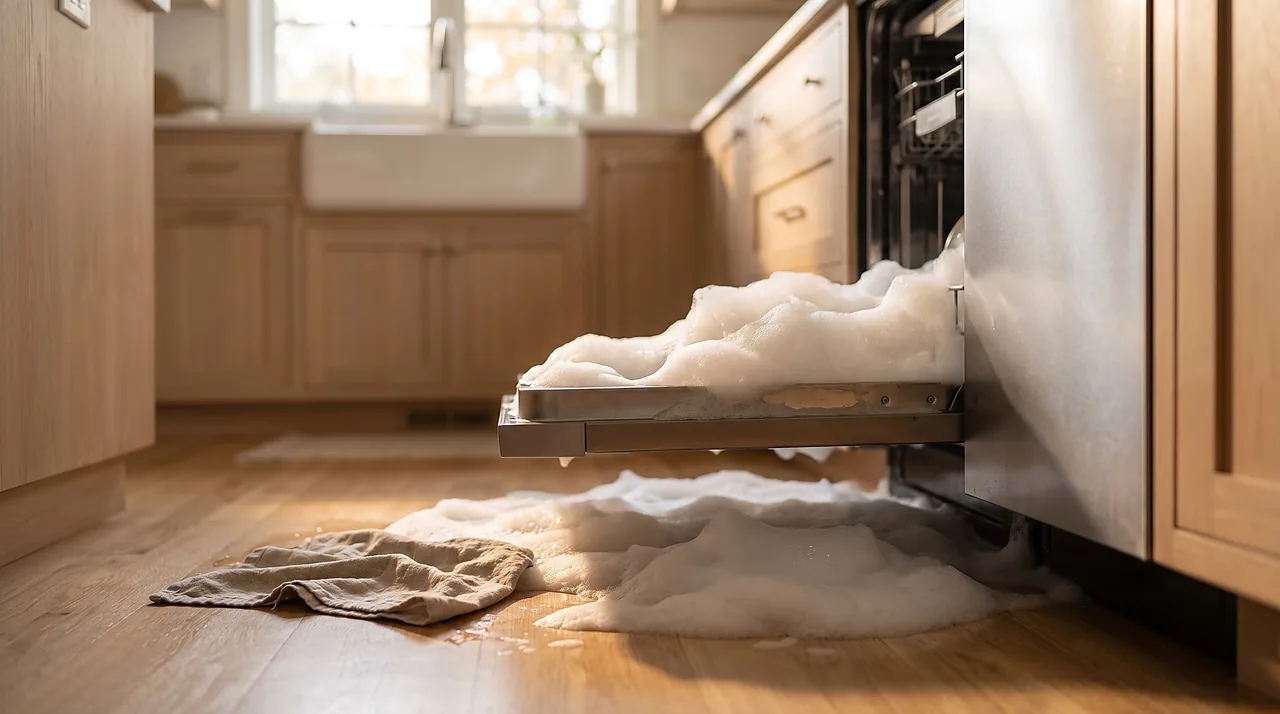
In hard water, more than half of a laundry detergent scoop was consumed just neutralizing dissolved minerals before it ever touched dirt on clothes. In softened water, 100% of that detergent goes straight into creating suds (Penn State Extension). If you keep pouring liquid detergent up to the cap line in a high-efficiency (HE) front-load washer, excess suds cushion the drum, trigger suds-lock error codes, and leave towels feeling stiff from un-rinsed soap residue.
- HE washing machines: Cut liquid or powder detergent by 50% to 70% - roughly 1 to 1.5 tablespoons per normal load is plenty in 0 gpg soft water. Skip fabric softener, as soft water naturally keeps fibers flexible without waxy buildup.
- Dishwashers: Cut loose powder or gel detergent in half. If you use pre-measured pods and start seeing cloudy etching or excess foam, switch to powder or basic single-tab packs so you can dial down the dose (and check why spots or filming can appear after a softener if glassware looks hazy).
What to actually check on the unit itself

While your household adjusts soap habits indoors, spend ten minutes in week one verifying six mechanical items on the softener that hurried installers frequently miss:
- Verify the bypass valve is in SERVICE position: Confirm the handles behind the control head are aligned with the pipes (not left in bypass from the plumbing pressure test).
- Check that your real Hardness (H) number is programmed: On valves like the Pentair Fleck 5600SXT, the hardness field accepts 1 to 199 gpg and directly times when the unit regenerates. Confirm the installer entered your actual tested hardness (plus iron compensation), not the 20 gpg factory default.
- Confirm an efficient salt dose and capacity setting: The Water Quality Association recommends programming softeners toward 4,000 grains of hardness removed per pound of salt (or the balanced 6 to 8 lb/ft³ daily sweet spot) rather than the wasteful maximum box rating.
- Check the brine tank salt level: Keep dry pellets or solar crystals above the standing water line (roughly one-third to one-half full). Review how much salt to keep in a water softener so you know what normal monthly consumption looks like.
- Expect a 2- to 4-day lag on hot water: Your cold kitchen tap turns soft within minutes of startup, but a 50-gallon water heater tank holds days of old hard water that must flush through gradually.
- Verify the first overnight regeneration cycle: A standard cycle uses roughly 50 gallons of water around 2:00 a.m. Make sure the drain line has a secure 1-inch air gap over the standpipe and does not splash onto the floor when backwashing.
A simple way to read what week you're in

Track your first month against this chronological baseline from the GrainsGone new-owner checklist:
- Days 1 to 3: Cold taps go soft immediately; soap suds explode
- Cold water tests at 0 to 1 gpg right away. Cut hand soap, shampoo, dishwasher gel, and laundry detergent by 50%+. If you see tiny white bubbles in a glass of water that clear from the bottom up in 30 seconds, that is just harmless trapped air from opening the plumbing lines.
- Days 3 to 7: The water heater tank finishes purging hard water
- Showers and bath water finally reach full softness once the old hard water inside the water heater is replaced. Existing scale crust inside your water heater and showerheads may begin loosening and flaking off over the next few weeks.
- Week 2: First automatic regeneration fires
- On a properly sized metered system, the gallon counter hits zero between Day 5 and Day 10 and runs its first 2:00 a.m. regeneration. Glance in the brine tank to confirm the salt pile settled slightly and water refilled to the normal bottom level.
- Weeks 3 to 4: Chalky faucet scale stops coming back
- Once you wipe old calcium crust off glass shower doors and faucet aerators with vinegar one last time, it stops returning. Skin and hair adapt to the lower soap routine.
- Day 30 and beyond: Routine monthly glance
- If water still feels hard or spots return, stop waiting and walk through how to test if your water softener is actually working.
First-month questions outside the bathroom
Four practical household questions almost always come up during month one:
- Drinking water and sodium: Softening exchanges calcium for sodium in direct proportion to your starting hardness. See the exact milligram-per-glass calculation in our sodium in softened water guide.
- Houseplants, lawns, and pets: Dogs and cats drink softened water normally, but potted houseplants and lawns do best on unsoftened outdoor hose bibs or rainwater so sodium does not build up in small pots - read softened water for plants and pets.
- Septic tanks: If your home discharges to a private leach field, read how efficient demand-initiated settings interact with a water softener on a septic system.
- Moving the unit later: If you ever relocate, see how to disconnect and move a water softener without spilling resin.
Questions people ask
Why does my new softened water look cloudy or milky right out of the faucet?
Fill a clear glass and watch it for 60 seconds. If the cloudiness clears from the bottom of the glass upward, it is microscopic air bubbles trapped in the plumbing and resin bed during installation. It is completely harmless and disappears within a few days to two weeks as air purges from the tank.
Why is there standing water at the bottom of my brand-new brine tank?
Standing water in the bottom 4 to 8 inches of the brine tank is normal. At the end of every regeneration cycle, the valve pumps a measured volume of fresh water into the salt bin so it can dissolve salt into saturated brine for the next cycle. As long as your dry salt sits higher than the water line (and the water isn't filling the tank to the top), it is working as designed.
Can a new water softener loosen old scale inside my pipes or water heater?
Yes. Soft water has a natural tendency to slowly re-dissolve and loosen existing calcium carbonate scale inside copper pipes and on water heater elements over the first few weeks. If a single faucet slows down in week two, unscrew the faucet tip aerator screen and rinse out any loosened white scale flakes caught inside.
Does a new water softener reduce household water pressure?
A properly sized softener on a 3/4-inch or 1-inch main line produces almost no noticeable pressure drop during normal use. If your pressure dropped immediately after installation, check whether a sediment pre-filter cartridge clogged with pipe debris stirred up during plumbing work, or whether the main shutoff or bypass valve was left partially closed.
Read next

Sources
- U.S. Geological Survey
- Penn State Extension, "Water Softening"
- Water Quality Association, "Getting Smart With Softeners"
- Pentair, "Fleck 5600SXT Downflow Service Manual"