On this page
- What mush actually is
- Signs it's mush, and how much water is normal
- Mush versus a salt bridge: not the same failure
- Why the injector can't pull brine through it
- How much you're dealing with changes what to do
- Clearing mush out of the tank
- Switching salt is what actually stops this from coming back
- When the job calls for a full clean-out
- Keeping mush from forming again
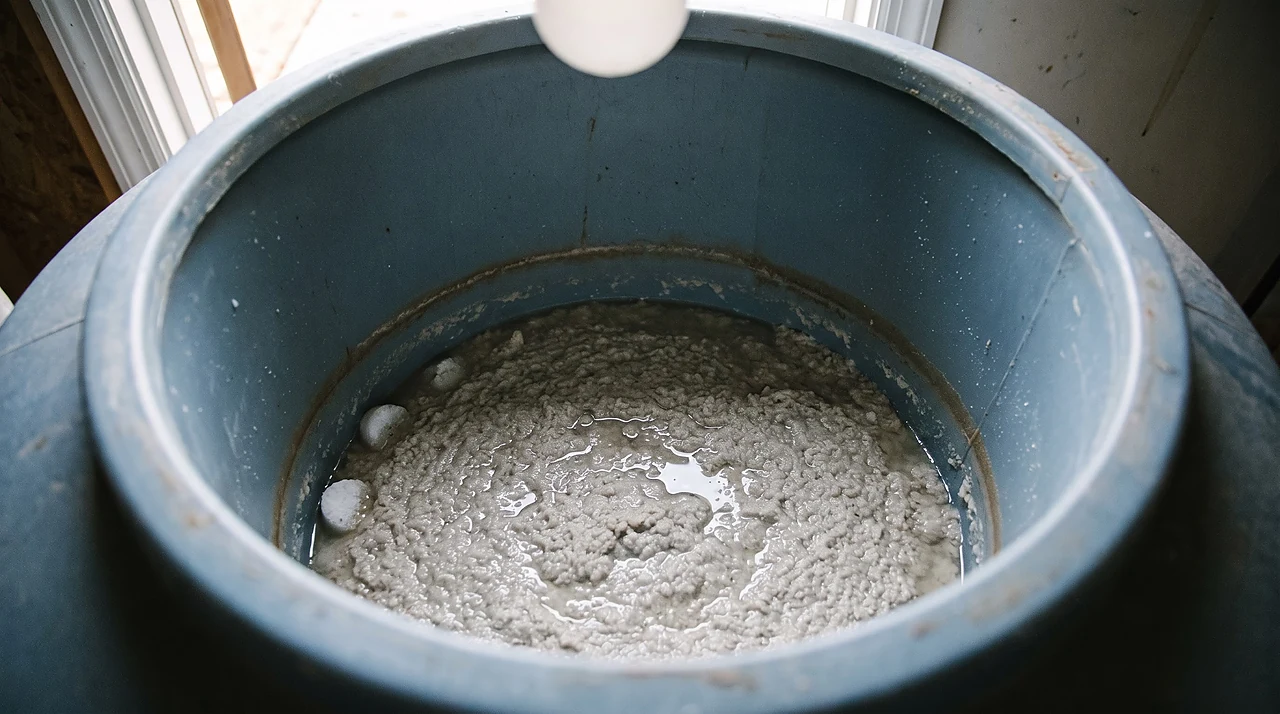
Salt mush is a dense, wet, oatmeal-like sludge of broken-down salt fines and insoluble dirt that settles on the floor of a water softener's brine tank. Unlike a salt bridge higher up in the tank, salt mush packs around the bottom of the brine well and can block the control valve from drawing brine during regeneration. Poking it with a broom handle does little, and hot water only loosens the salt part of it: the dependable fix is to scoop the wet paste out, rinse the floor and brine well clean, and switch to high-purity evaporated salt pellets.
What mush actually is
Two separate processes create the gray paste at the bottom of a brine tank:
- Pellets breaking down into fines: Salt that sits in brine for a long time, especially under the weight of an overfilled tank, softens and crumbles into fine crystals that sink and settle into a dense, sandy slurry on the tank floor instead of dissolving into brine.
- Accumulation of insoluble dirt from low-purity salt: As salt producer Cargill notes, salt that carries insolubles such as rock and mineral fines leaves them to build up in the bottom of your brine tank bag after bag. That is one reason Pentair's Fleck 5600 service manual explicitly warns: "NOTE: Do not use granulated or rock salt."
Signs it's mush, and how much water is normal
Most softeners keep some water in the bottom of the brine tank, so water alone is not a fault. The working rule is to keep the tank one-quarter to one-half full with salt sitting above the water line. Mush is the likely suspect when you see these together:
- Water standing above the salt, or a tank that stays full after a regeneration, because the valve can no longer draw it down.
- A salt level that has not dropped for weeks. A typical household goes through 40 to 80 pounds a month, so one 40-pound bag usually lasts about two to four weeks.
- Hard water back at the taps, because the resin is being regenerated with little or no brine.
If standing water is the main symptom and the bottom feels clean, the cause is more likely a float, brine line, or drain problem; see brine tank full of water.
Mush versus a salt bridge: not the same failure

The Water Quality Association describes a salt bridge as salt sticking together into one large solid mass, which keeps the water beneath it from becoming saturated brine. Salt mush happens down at the floor. When you probe the tank with a wooden broom handle, the feel tells you which one you have:
- Hard stop partway down, with a hollow pocket or loose water underneath
- Diagnosis: Salt bridge. A crust of fused salt holding up the pellets above it. Follow our guide to breaking up a salt bridge.
- No hard shelf up top, but the broom handle sinks into thick, gritty wet paste at the bottom of the tank
- Diagnosis: Salt mush. Broken-down fines and insoluble sludge packed on the floor. Scoop it out using the steps below.
- Hard crust partway down AND thick gray sludge on the floor underneath it
- Diagnosis: Combined bridge and mush (more likely in an overfilled tank). Break the crust first, then scoop the tank empty.
- Loose pellets all the way to the clean plastic floor, yet salt level never drops
- Diagnosis: Mechanical brine-draw failure (clogged venturi injector or air leak). Work through why the unit isn't using salt.
Why the injector can't pull brine through it
At the bottom of the vertical brine well sits the brine pickup screen (or air-check cage), close to the tank floor. During the brine draw stage of regeneration, the control valve's venturi injector creates the suction that pulls saturated brine through that pickup and up the brine line; Pentair's maintenance guide describes the venturi as the part responsible for the system's suction.
Once salt mush builds up around the bottom of the brine well, the paste chokes off liquid flow to the pickup screen, and fine silt drawn up the brine line can plug the small screen and nozzle in the injector. Either way the valve stops drawing brine, and regeneration runs without salt.
How much you're dealing with changes what to do
- A thin layer of gray sediment on the floor (pickup screen still clear)
- Action: Let your current salt run down low over the next few weeks, then scoop the bottom residue out with a plastic cup before refilling with evaporated pellets.
- Thick, oatmeal-like paste burying the bottom of the brine well (water in the house is hard)
- Action: Scoop it out now, plus a quick rinse of the brine well air-check and the control valve's injector screen.
- Foul-smelling black or brown mud, floating scum, or slime coating the tank walls
- Action: Disconnect the brine line, take the tank outside, scrub it, and sanitize it per our full brine tank cleaning guide.
Clearing mush out of the tank

A six-step cleanout clears a mushed brine tank without taking the whole system apart:
- Put the softener in Bypass: Turn the bypass valve to Bypass so the softener does not start a cycle while the brine tank is open.
- Save clean dry pellets from the top: Scoop out any dry, intact pellets sitting above the wet sludge and set them in a clean 5-gallon bucket.
- Dig and vacuum out the wet mush: Use a heavy plastic scoop, small plastic dustpan, or a wet/dry shop vacuum to pull the gray paste off the bottom floor. If a hard salt clog will not break up, pour a few gallons of hot tap water around it and let it sit to loosen, then keep scooping. (If your tank has a perforated plastic salt grid plate at the bottom, lift the grid plate out so you can reach the sludge trapped underneath it.)
- Flush the bottom of the brine well: Unscrew the cap on the narrow brine well cylinder, lift out the float assembly, and rinse the bottom check-valve cage under a utility sink faucet so no salt paste remains inside the pickup screen.
- Rinse the tank floor: Pour a couple of gallons of warm tap water into the empty brine tank, scrub the floor with a long-handled brush, and suck or bail the dirty rinse water out with your wet vac or a sponge.
- Reassemble, refill, wait, and regenerate: Add a few gallons of clean water and enough evaporated salt pellets (including the clean pellets you saved) to bring the tank to one-quarter to one-half full. Give it at least a couple of hours to form saturated brine, return the valve to Service, and trigger a manual regeneration. If the tank still fails to draw down during the cycle, check why the softener isn't using salt (specifically the venturi injector screen).
Switching salt is what actually stops this from coming back

If you clean out salt mush and pour the same rock salt or fine granulated salt back in, the sludge will return. Compacted evaporated salt pellets are the high-purity option and hold their shape in brine better than loose crystals, so they leave far less insoluble residue behind. Compare the salt types side by side in how the salt types actually compare.
When the job calls for a full clean-out
Pentair's Fleck SXT owner's manual says to empty and clean the brine tank every three years; every two to three years is a sound general interval, and more often if you use rock salt. Whenever you see dark ring stains, slime, or a musty odor alongside the bottom mush, go beyond a simple scoop-out and follow our complete procedure for emptying, scrubbing, and sanitizing the brine tank.
Keeping mush from forming again
- Keep the brine tank one-quarter to one-half full: Adding one 40-pound bag at a time, after checking the level monthly, keeps less weight pressing on the pellets at the bottom.
- Leave the dust at the bottom of the bag out of the tank: The fine salt dust in the corners of a bag is the same fines that pack into mush; throw it in the household trash.
- Stick to evaporated sodium chloride pellets: Avoid mixing solar crystals and evaporated pellets in the same tank.
Read next


Questions people ask
Do you just dump salt into a water softener?
Mostly, yes: pour the pellets in on top of what is there. Before you do, push a broom handle down through the salt to check for a crust or bottom sludge, keep the total at one-quarter to one-half of the tank rather than filling to the rim, and leave the fine dust at the bottom of the bag out.
How long should a 40 lb bag of salt last in a water softener?
For a typical household using 40 to 80 pounds a month, about two to four weeks. If the level has not moved in several weeks while the softener is regenerating, suspect a salt bridge, salt mush, or a brine draw problem rather than unusually low use.
Can I just pour boiling water into the brine tank to dissolve salt mush instead of scooping it out?
Hot tap water is enough to help loosen and dissolve a hard salt clog, and boiling water adds scald risk without much benefit. Neither one removes the insoluble dirt and clay that make up part of the mush, so you still have to scoop or wet-vac the bottom out.
Does salt mush damage the resin beads inside the mineral tank?
The mush itself stays in the brine tank, behind the brine pickup screen and the injector screen, so it does not enter the resin bed. However, because mush prevents brine from being drawn during regeneration, the resin stays exhausted and hard water flows straight through the system until you clear the mush and run a regeneration with good brine (one or two, if the water was hard for a while).
Why do I keep getting salt mush when I use potassium chloride pellets?
Potassium chloride (`KCl`) dissolves differently from sodium chloride, and its solubility changes much more with temperature, so in a garage or basement that warms and cools it is more likely to drop out as fine crystals that pack on the tank floor. If you use KCl, keep the tank on the low side of the one-quarter to one-half range and add smaller amounts more often. The tradeoffs of switching are covered in our potassium chloride guide.
How do I dispose of the wet salt mush I scoop out of the tank?
Do not dump buckets of concentrated salt sludge onto your lawn, garden beds, or driveway edges, because salt builds up in soil and harms plants, and do not wash it into a septic system. Bag the scooped paste in heavy-duty trash bags for normal household garbage pickup.
Sources
- Water Quality Association (WQA), Glossary of Terms
- Pentair, Fleck 5600 Service Manual
- Cargill
- Pentair, water softener maintenance guide
- Pentair, Fleck SXT Controllers Owner's Manual